
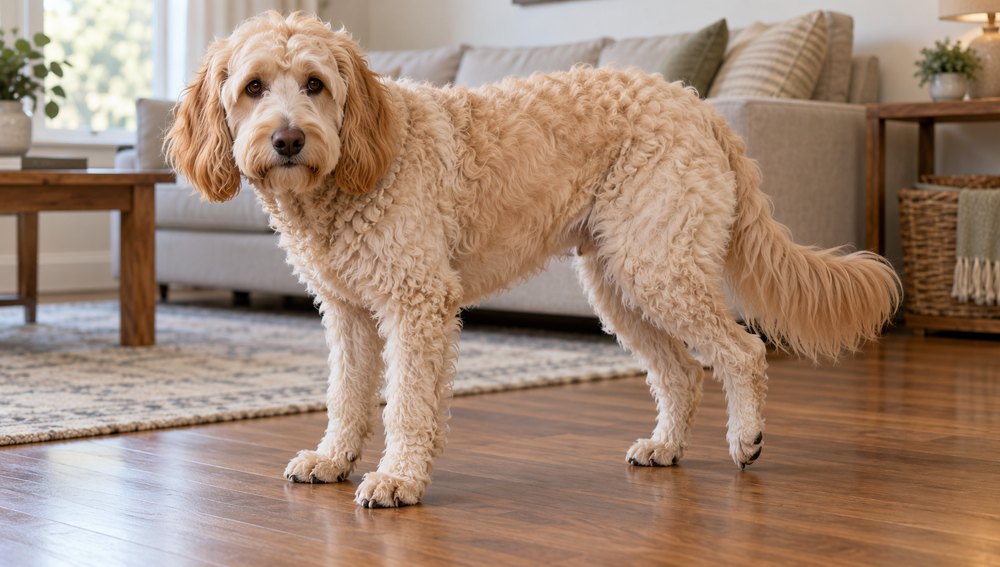
A torn cruciate ligament, the canine version of a human ACL, usually shows itself in how your dog moves: a hind-leg limp that comes and goes, trouble rising, hesitation at the stairs, or a sit with one back leg swung out to the side. A complete tear can happen in a single stride and leave your dog refusing to put the foot down, while a partial one wears through slowly and looks like stiffness that eases with rest and returns after hard play. No single sign confirms a cruciate injury on its own, and a hands-on knee exam is what separates it from the other reasons a back leg hurts. Catching it early matters, because an unstable knee builds arthritis with every step and the treatment choices are widest before that damage sets in.
Harbor Pines Veterinary Center in Harbor City treats these knees often, and we know the question underneath the limp is usually how big this is going to get. We examine the joint for the looseness that gives a cruciate tear away and use digital X-rays to look at the bone and any arthritis already there, then talk through the choices, from weight management and laser therapy to ACL repair at our AAHA-accredited hospital. If the car ride is the hard part when your dog is this sore, we can start with a home health exam instead. When your dog is favoring a back leg or sitting with it kicked out, have that knee checked in the next day or two rather than waiting to see if the limp settles.
Torn Cruciate Ligaments: The Basics
- Many cruciate tears follow months of gradual ligament weakening rather than one dramatic injury, so the stride that finishes the job is often an ordinary one.
- A limp that fades with rest and returns after hard play needs a hands-on knee exam, not another week of watching.
- A torn ligament can't heal on its own, and the longer the knee stays unstable, the more arthritis and muscle loss there is to work around later.
- Size, age, activity level, and the shape of your dog's own knee all steer the choice between surgical repair and conservative management.
What Happens If a Torn Cruciate Goes Untreated?
A torn cruciate doesn't knit back together, so the knee stays unstable and keeps damaging itself. Every stride lets the shin bone slide forward across cartilage that was never built to take that load.
- Arthritis: The joint builds arthritis faster while it stays unstable than it does after a repair.
- Scar tissue and muscle loss: Scar tissue thickens the capsule around the joint, which adds a little stability at the cost of range of motion, and the thigh muscle on that side shrinks from months of being spared. A dog who comes to surgery after a long stretch of limping has more rebuilding ahead.
- Meniscal tears: The cartilage cushions inside the knee, called the menisci, sit between bones that no longer track properly and get pinched. If a dog who had been slowly improving suddenly stops using the leg, call us that day rather than giving it another week.
- The other three legs: They carry load they weren't built for while your dog spares the sore one, and the chance of your dog rupturing their other cruciate ligament in the other knee rises from the compensation.
How Do You Tell a Torn Cruciate From Another Hind-Leg Problem?
Plenty of problems produce the same hind-leg limp. A soft-tissue sprain, a fracture, hip dysplasia, a groin injury, a disc problem in the lower back, an infected joint, and in older large-breed dogs a bone tumor can all look alike from across the room, and a few of those need a very different plan.
Which Signs Point to the Knee?
A back leg that toe-touches one day and looks nearly normal the next points at the knee, along with slower rises from the floor, a skipped jump into the car, and swelling along the inside of the joint. An audible click as the leg bends can mean the meniscus is torn as well, and that on-and-off limp is the classic partial tear pattern.
If the soreness lasts more than a day or two, schedule an exam and take a video of how your dog moves at home, since they often walk differently in the hospital.
How Is a Cruciate Tear Diagnosed?
Diagnosis starts with hands on the leg, and imaging answers the questions the exam can't.
- The gait and the stance: Standing still, a dog with a sore knee shifts weight off that side and rests the toe. Sitting, the leg often swings wide instead of folding underneath.
- The drawer test: Pressing the thigh bone and shin bone in opposite directions reveals the forward slide of the shin bone, known as cranial drawer, and a tibial compression test shows the same slide by mimicking weight bearing. A tense or painful dog may need sedation for a clear answer.
- X-rays: X-ray imaging doesn't show the torn ligament itself, but it shows the bones, joint swelling, and any arthritis already in the knee, and it lets us measure the slope at the top of the shin bone that steers the surgical choice.
- When more detail is needed: MRI adds the soft-tissue detail X-rays can't capture and is reserved for complicated knees, where a suspected meniscal injury or an unclear exam needs an answer before surgery. That equipment lives at specialty centers.
Why Do Cruciate Ligaments Tear, and Which Dogs Tear Them Most?
Cruciate ligament injury in dogs usually traces back to months of quiet ligament degeneration rather than one bad landing, so a dog can finish the tear stepping off a curb. The cranial cruciate runs diagonally through the stifle, the joint that does the same job as our knee, and stops the shin bone from sliding forward under the thigh bone with each step.
- Breed and build: Labradors, Rottweilers, Newfoundlands, Staffordshire-type breeds, and other large, heavily muscled dogs tear cruciates more than most, but Yorkies, Pomeranians, and other toy breeds tear them too, often alongside a kneecap that slips out of its groove.
- The slope of the knee: The tibial plateau, the flat top of the shin bone, sits at an angle in every dog, and a steeper angle pushes more forward shearing force through the ligament with each step.
- Body weight: Extra pounds are linked to increased risk of tearing in the first place, and to a slower recovery after surgery.
- How your dog spends the week: A dog who rests all week and then sprints and cuts hard at a Harbor City park on Saturday asks a lot of a ligament that's already worn.
Dogs who tear one cruciate carry a higher risk of tearing the other, since the same anatomy and degeneration exist on both sides. Breed and bone shape can't be changed, but weight and conditioning can, and our team can help you build a nutrition and activity plan around your dog's joints.
Can Rest and Medication Fix This Without Surgery?
Rest and medication can leave some dogs comfortable, but they don't repair the knee. Conservative management means strict activity restriction, anti-inflammatory medication, weight loss where there's weight to lose, and physical rehabilitation. For medium, large, and giant breeds, surgery usually gives better long-term function, because the force crossing a bigger dog's stifle keeps arthritis building.
Conservative care fits best for:
- Very small dogs: Toy breeds and other small dogs send less force across the knee with each step.
- Dogs whose days are already quiet: A low-activity dog asks less of an unstable joint.
- Dogs for whom anesthesia is the bigger risk: Heart, kidney, or liver disease can make surgery the greater danger.
Conservative care isn't the same as resting at home. Weeks of confinement and leash-only trips outside are what give scar tissue time to stabilize the joint, and laser therapy here can take the edge off the inflammation and soreness while the joint quiets down. Our team will go through your dog's size, age, bloodwork, and what you want them still able to do before recommending either path.
Never give human pain relievers while you wait. Ibuprofen, naproxen, and acetaminophen cause stomach ulcers, kidney failure, and liver damage in dogs. Call us and we'll prescribe something safe.
How Do TPLO, TTA, and Extracapsular Repair Differ?
Three repairs cover most knees: TPLO, TTA, and extracapsular suture stabilization. The first two cut and reshape bone so the knee stabilizes itself and no longer depends on a ligament that's already gone, which is why they're the usual recommendation for medium, large, and highly active dogs. The third stands a heavy suture outside the joint in the ligament's place and suits smaller, lighter dogs. TPLO and TTA can still be a great choice even for small dogs, as they result in the most stable joint.
Which Repair Fits Which Dog?
| Repair | How it works | Usually suited to | What recovery asks |
| TPLO (tibial plateau leveling osteotomy) | Shin bone cut and rotated to level the slope, held with a plate | Medium, large, and athletic dogs, including many smaller ones | Bone has to knit, so early restriction is strict |
| TTA (tibial tuberosity advancement) | Front of the shin bone repositioned so thigh muscles stabilize the joint under load | Many of the same dogs, by knee geometry and surgeon preference | Also a bone-healing timeline, same early limits |
| Extracapsular repair (lateral suture) | Strong suture outside the joint stands in for the ligament while scar tissue builds support | Smaller, lighter, less athletic dogs | No bone cut, but the suture can stretch, so activity control still matters |
Our veterinarians make that choice with the X-ray in front of them rather than over the phone, weighing your dog's size and age against the slope it shows. Pain control should begin before the first incision and continue at home.
What Does Rehabilitation After Surgery Involve?
Structured rehabilitation rebuilds the thigh muscle lost during the weeks of limping and restores the knee's full range of motion. Staging matters: too much too early threatens the plate or the suture, and too little leaves a stable knee on a weak leg.
| Phase | Goal | What it looks like |
| Early weeks | Protect the repair and settle swelling | Confinement, leash trips for bathroom breaks only, cold packing, an incision kept dry and unlicked, and gentle range-of-motion work we show you |
| Middle stretch | Rebuild muscle without stressing the repair | Gradually longer leash walks, sit-to-stand reps, slow figure eights, and weight-shifting work |
| Return to activity | Restore strength and confidence | Hills, longer walks, and controlled play, with running and jumping added last, only once a recheck says the bone has healed |
Underwater treadmill work and other formal sessions happen at rehabilitation facilities, and many dogs do well on a home program we adjust at each recheck. Call us between visits if the incision turns red or swollen or starts draining, or if your dog suddenly stops using the leg.
How Do You Set Up Your Home for a Recovering Knee?
Home recovery is mostly containment and traction: a repair holds only if your dog can't launch off the couch, take the stairs at speed, or skid across tile. For roughly the first two to three months, until a recheck confirms the bone or suture has settled, that means a crate or small room, a leash for every bathroom trip, and rugs down the main routes.
How Do You Get Through Weeks of Crate Rest?
Crate rest goes far better when the crate sits in the room where you spend your evenings and your dog has puzzle feeders, snuffle mats, and lick mats to burn mental energy instead of physical. Meals, potty breaks, and enrichment at the same times each day settle a confined dog. Keep a sling or rear-support harness by the door, since lifting under the hips protects the knee and your back at the same time.
Rechecks fall during this stretch, and if lifting a sore dog into the car undoes a week of careful rest, our in-home exams come to you instead.
What Can You Do to Lower the Risk to Both Knees?
Long-term protection comes down to a lean body, reliable footing, and activity that builds gradually instead of spiking. A few minutes of easy leash walking before and after hard activity, the canine version of warm-ups and cooldowns, gets the muscles around a repaired knee ready to work and cuts the stiffness that shows up the next morning. Every extra pound adds load through both stifles, and weight control is among the most useful things you can do at home.
Runners on hardwood, a ramp into the back of the car, and a game of fetch that doesn't end in a hard skid at the fence all cut down on pivots and hard landings. For a dog who has already lost one cruciate, swimming and long flat walks around Harbor City are kinder than frisbee.
What Else Do Families Ask About Cruciate Tears?
Can a knee brace replace surgery?
A brace can't replace surgery, though a custom one can limit how far the shin bone slides and leave some dogs more comfortable, which makes it a reasonable option for a dog who truly can't have anesthesia. It can't restore stability inside the joint, so braced knees tend to keep accumulating arthritis, and off-the-shelf versions often slip or rub until sores develop. If bracing is the plan, we'll help you get one fitted and watch the skin underneath.
Will my dog run and play normally again?
Most dogs who get a solid repair and committed rehab end up using the leg comfortably, and plenty go back to hiking, swimming, and play. What usually lingers is some arthritis in that knee, so weight and conditioning stay part of the plan for good. Dogs who come to surgery with a meniscal tear or advanced arthritis often take longer and may not get all the way back.
Is my dog too old for cruciate surgery?
Age on its own doesn't rule a dog out. Organ function, other illnesses, and quality of life decide it. We start with bloodwork and a full physical to see how an older dog would handle anesthesia, then look at what they're still doing with their days. A comfortable twelve-year-old with good kidneys can do well, while for a dog managing heart or kidney disease, conservative care with strong pain control is sometimes the kinder plan, and we'll tell you if that's what we think.
Let's Get Your Dog Comfortable on That Leg Again
When your dog has been limping and you aren’t sure if it’s a serious problem or something that will get better with rest, don’t wait. The longer you second guess the decision, the more time arthritis has to start and more damage is done. Give us a call or visit us at Harbor Pines Veterinary Center in Harbor City, and we'll examine the knee, take X-rays, and lay out what each path would ask of you and of your dog.